The Hall
Never sold, always lived in.
A splendid and glittering composition, in the same family since 1173.
Burton Agnes Hall is a house of immense charm and character. It has many unusual features and is fortunate in suffering so little from alterations or additions in its history.
The beautiful proportions of the Hall and its adherence to the principles of Tudor Renaissance architecture (Commoditie, Firmness and Delight) confirm that a professional hand drew up the designs. The architect was in fact Robert Smythson - Master Mason to Queen Elizabeth I and builder of such other glorious houses as Longleat, Wollaton and Hardwick. It is the only Smythson house where the plan still exists, in the RIBA collection. In his definitive book on the Smythsons, Mark Girouard called Burton Agnes a 'spendid and glittering composition'.
Inside the Hall
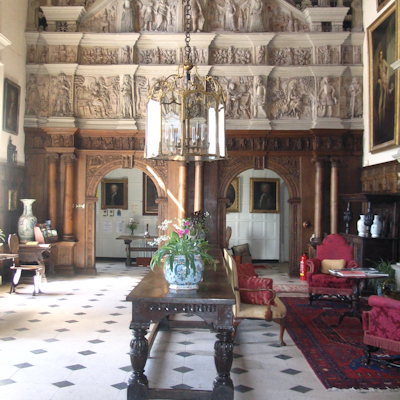
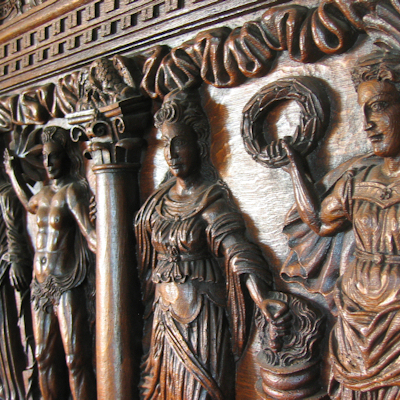
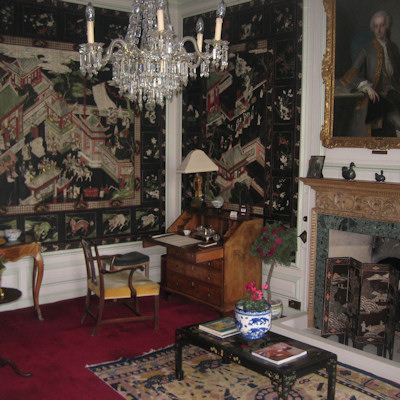
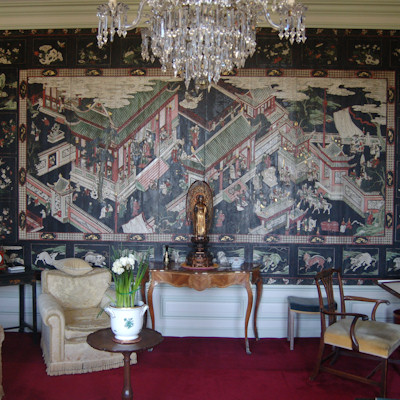
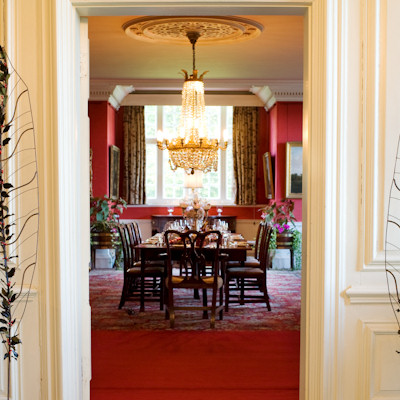
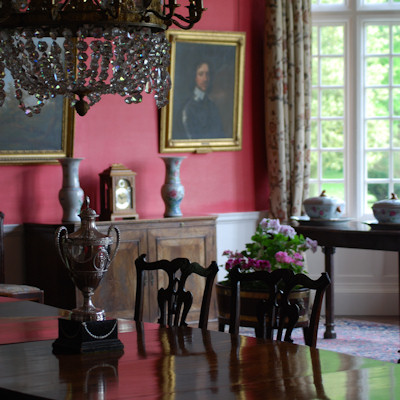
Their own words and photographsThe Hall is filled with treasures collected and commissioned by the family over four centuries. The original Elizabethan carving and plasterwork still decorates many rooms, while there are some lovely examples of Georgian furniture and porcelain and many modern French and English paintings of the Impressionist Schools.
Marcus Wickham-Boynton, the previous owner of Burton Agnes Hall, started his collection of English and French paintings of the eighteenth and nineteenth centuries in 1937 with the encouragement of two collector friends; Lord Ivor Spencer Churchill and the Right Hon. Harcourt 'Crinks' Johnstone. His appreciation of French Impressionists owed much to the influence of Samuel Courtauld.
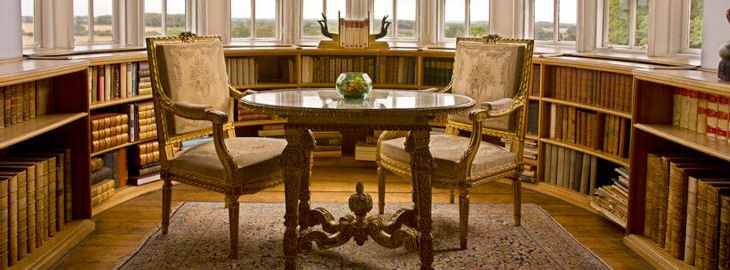
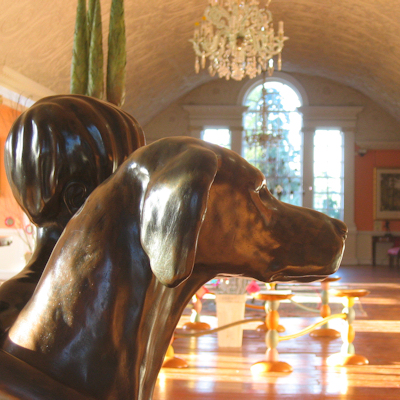
The Long Gallery, which spans the length of the house on the third floor with panoramic views to Bridlington Bay, houses some of the most recent commissions including furniture by John Makepeace, and our more recent commission, a stunning glass sculpture by Colin Reid, while the ground floor Garden Gallery is home to a tapestry by Kaffe Fassett and an embroidery by Janet Haigh, amongst other modern pieces.
Burton Agnes Hall is a magnificent example of Elizabethan architecture, built in 1598 by Sir Henry Griffith. The entrance front faces south, its symmetry retained by the device of putting the entrance door at the side of one of the projecting bays.
The eastern skyline of the Hall is romantically irregular and shows how the front of the house was built higher than the rear in order to accommodate the Long Gallery on the top floor. The Palladian windows at each end of the Gallery were eighteenth century additions, and the top floor Gallery itself was fully restored in 1974.
- Built1598, by Sir Henry Griffith, to Robert Smythson's designs
- ListedGrade I; the Norman Manor House in the guardianship of English Heritage
- OwnedBy the same family since 1173; never changed hands by sale
- Cared forThe Burton Agnes Hall Preservation Trust, a registered charity, since 1977
Burton Agnes Hall has been in the same family since it was built in 1598, and has at times passed through the female line.
In 1977 Marcus Wickham-Boynton handed the Hall and gardens to a charitable trust formed for its protection and future upkeep. Under this arrangement it was hoped that future generations of the family would continue to live at Burton Agnes and it would therefore remain a 'lived-in' family home.
In 1989 on Marcus Wickham-Boynton's death the estate passed to his young cousin Simon Cunliffe-Lister and, until he came of age, was under the guardianship of his mother, Susan Cunliffe-Lister.
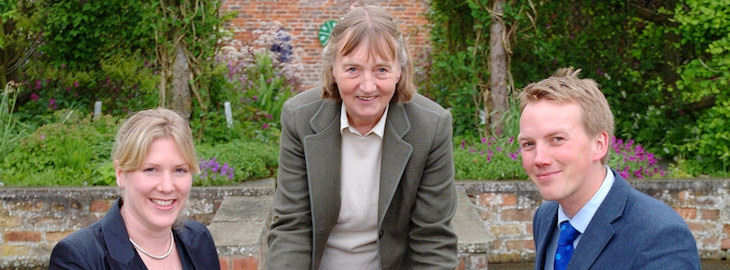
In 2005 Simon formally took responsibility for Burton Agnes Hall. Simon - together with his wife Olivia and their five children, Islay, Joss, Otis, Inigo and Sholto - continues the tradition of maintaining and caring for this well-loved family home.
- NormanIn 1173 Roger de Stuteville built the Norman manor-house, the lower chamber of which still remains today. One of his daughters was named Agnes and she may have been responsible for the name Burton Agnes, which was first recorded on a deed witnessed about 1175.
- TudorThe Griffiths were a Welsh family who had emigrated to Staffordshire in the thirteenth century. In 1457 an heir to the estates, Sir Walter Griffith, came to live in the old manor house. He is believed to have added the room above, which would have been the Great Hall.
- ElizabethanIn 1599 Sir Henry Griffith was appointed to the Council of the North, based in York, and, although he had already started to build a new home in the Midlands, this was abandoned in favour of strategically sited Burton Agnes.
- JacobeanSir Matthew Boynton was a Royalist. He contrived the seizure of Sir John Hotham, the Governor of Hull, but later changed allegiance and was appointed by Cromwell to command the Garrison of Hull.
- GeorgianMary Hebblethwaite, widow of the 6th Baronet, married secondly John Parkhurst of Catesby Abbey, Northamptonshire, known as 'Handsome Jack'. On coming into his estates, he soon ran through his fortune in reckless extravagance.
- RegencySir Francis was a great sportsman and bred famous gamecocks to fight in the cockpit, the site of which still exists in the Park Field. He married Sarah Bucktrout, a circus rider whose father kept the Black Swan in York.
- VictorianSir Henry Somerville Boynton was a great naturalist and kept aviaries at the Hall. He also had a large collection of stuffed birds which were lent to the Hull Museum, but were destroyed by bombs in 1942.
- Twentieth CenturyMarcus Wickham-Boynton was responsible for extensive restoration of the house, the most notable of which was the restoration of the Long Gallery. He greatly added to the treasures at Burton Agnes: notably the collection of French paintings, the Epstein bronzes, the Chinese porcelain and much rare furniture. In 1977 he gave Burton Agnes Hall, some 42 acres of surrounding gardens and grounds, over 600 acres of good agricultural land plus a substantial cash endowment to the Trust.
Burton Agnes Hall has been in the same family since it was built in 1598, and has at times passed through the female line.
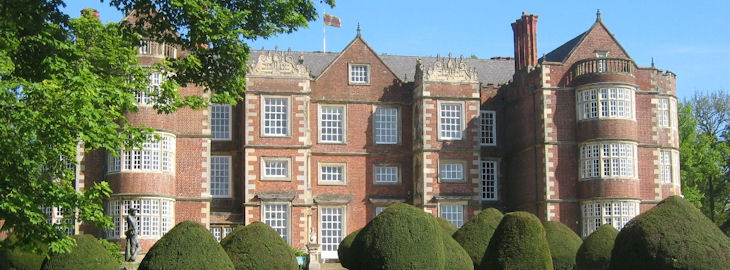
The south front of Burton Agnes Hall. Their own photograph.
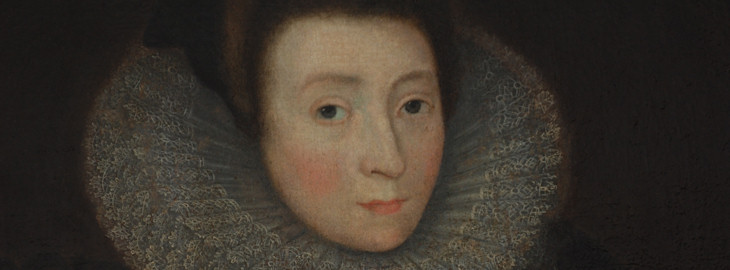
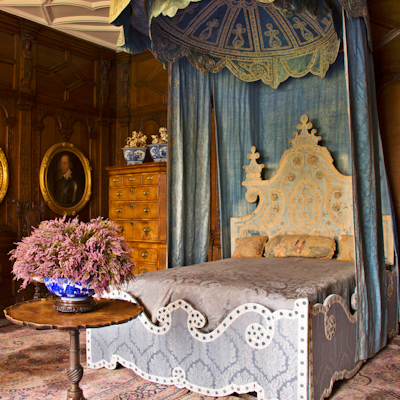
The ghost of Katherine (Anne) Griffith, who died at Burton Agnes Hall in 1620, is reputed to have haunted the Queen's State Bedroom. Anne Griffith was the youngest of the three sisters whose portrait hangs in the Inner Hall, daughters of Sir Henry Griffith who built the Hall.
Sometimes delirious, sometimes sensible, she told her sisters that she would never rest unless part of her could remain in 'our beautiful home as long as it shall last'. She made them promise that when she was dead her head should be severed and preserved in the Hall forever.
The skull is still in the house, built into one of the old walls, probably in the Great Hall. Nobody knows for sure just where it is but now she can watch over 'her beautiful home'.
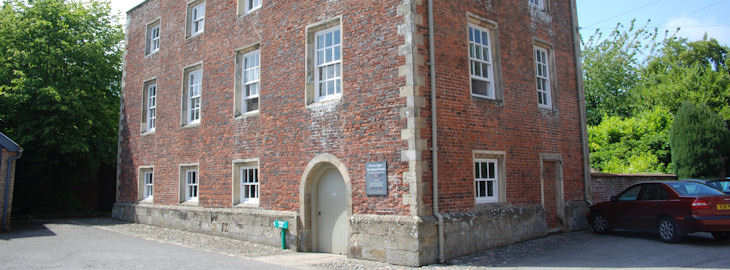
The Manor House was encased in brick during the seventeenth century, when it was used as a laundry block. The lower chamber still survives in all its gloomy Norman splendour, with massive piers supporting a groined and vaulted roof, reinforced with heavy chamfered ribs. Behind the building is a rare example of an old water wheel worked by a donkey, which drew up water from the well.
The Manor House is a grade I listed building under the guardianship of English Heritage. It is open to the public daily April to October from 11am to 5pm and is free of charge.
- Built1173, by Roger de Stuteville
- OpenDaily April to October, 11am to 5pm, free of charge
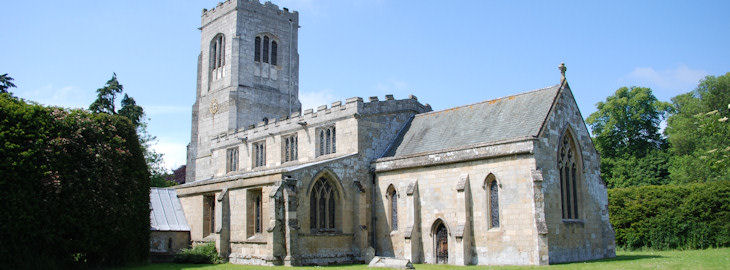
St Martin's Church, situated behind the Norman Manor House, dates from the twelfth-century. The chancel has mid-nineteenth century restoration carried out by Archdeacon Wilberforce, son of the reformer William Wilberforce. Many of the family tombs are of considerable historic and architectural interest.
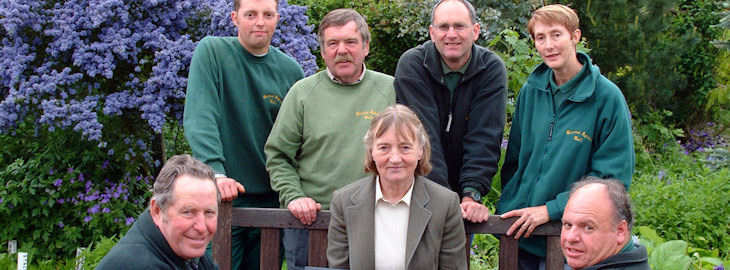
Burton Agnes Hall has a team of over 50 staff that work to ensure the preservation and maintenance of the beautiful Elizabethan Hall and gardens and wider estate. As well as a historic house and visitor attraction Burton Agnes has a working Farm and Stud and a number of estate cottages.
The 3,000 acres of woodland, grazing pastures and arable farm land lie on the southern edge of the Yorkshire Wolds, five miles inland from the stretching sands of the Holderness coast.
- StaffOver 50
- Estate3,000 acres of woodland, grazing pastures and arable farm land
- Enquiries01262 490324, office@burtonagnes.com
'Burton Agnes Hall ranks among the finest, and best presented, houses in England. It is the perfect English house, embodying the climax of the final great age of domestic architecture.' Simon Jenkins, 'England's Thousand Best Houses'
Next: The Gardens
Get lost.